
The Songwriter Hasn’t Disappeared — The Toolbox Has Changed
The New Generation of Songwriters
Human Creativity in the Age of Artificial Intelligence
Music has always changed when new technology arrives.
The electric guitar changed what a guitar could sound like.
The synthesiser introduced sounds that had never existed before.
The drum machine changed rhythm and production.
Samplers changed the way musicians could use existing sounds.
Digital recording changed the studio.
Auto-Tune changed the way vocals could be recorded and produced.
Now we have another major change:
Artificial Intelligence.
And with it comes a new generation of songwriters, musicians and independent artists who are using AI as another tool in their creative process.
This isn’t necessarily about replacing the songwriter.
It is about giving the songwriter another instrument.
AI Doesn’t Have to Mean “No Human Creativity”
There is an important distinction between an entirely automated piece of music and a human artist using AI as part of their creative process.
A songwriter can have the idea.
They can choose the subject.
They can write the story.
They can decide what the song is about.
They can reject ideas they don’t like.
They can rewrite lyrics.
They can change the melody, arrangement, tempo, instrumentation and structure.
They can decide what stays and what gets thrown away.
They can create the artwork, video, website and visual identity surrounding the music.
AI can then become another part of that process.
For many artists, it is closer to having another tool in the studio than handing over the entire creative process.
And this isn’t just something being done by unknown musicians experimenting in bedrooms.
Some very established names in music are exploring it too.
Boy George: A New Approach to Songwriting
One of the clearest examples is Boy George, the singer and songwriter best known as the frontman of Culture Club.
In 2026, Boy George openly discussed his use of AI in songwriting.
He explained that using AI had really helped him as a lyricist and described having conversations with ChatGPT while developing songs.
He also explained something particularly interesting about the process: he can look at an AI-generated suggestion and simply reject it if it doesn’t sound like something he would say.
In other words, the machine doesn’t automatically become the songwriter.
The songwriter remains the person making the decisions.
Boy George has said he has written around five albums with the assistance of AI and has described the technology very positively.
That is significant.
This isn’t somebody who has never written a song before discovering AI.
This is an established songwriter with decades of experience using a new technology to explore his creativity.
Björn Ulvaeus: AI as Another Songwriter in the Room
Another fascinating example comes from Björn Ulvaeus of ABBA.
Ulvaeus has spent more than half a century writing some of the world’s best-known songs.
Yet he has also embraced AI as a creative tool.
While working on a new musical, Ulvaeus revealed that he was using AI to assist his songwriting.
He described AI as being like another songwriter in the room with a huge reference frame and said it could help him when he became stuck or needed another direction.
Importantly, he has also acknowledged AI’s limitations.
It doesn’t simply produce a perfect song and hand it to him.
Sometimes the results are poor.
But occasionally an idea generated by the technology can trigger another idea in the human songwriter.
And that is perhaps one of the most interesting uses of AI in music:
The machine doesn’t necessarily have to provide the finished answer.
Sometimes it only has to provide the spark that makes the human think differently.
Tyga: AI Moving Into Music Production
The conversation is also moving beyond lyrics.
In 2026, rapper Tyga revealed that AI had been used in the creation of his album $TARFACE.
He explained that AI was used to generate musical elements including 1980s-style synthesiser and guitar sounds, while he retained control of his lyrics and vocals.
Tyga compared the controversy surrounding AI with the earlier controversy surrounding Auto-Tune.
Whether people agree with his approach or not, it demonstrates how quickly the technology is becoming another part of the modern production toolbox.
This Is Bigger Than One or Two Artists
The use of AI isn’t restricted to famous musicians.
A 2025 survey from music distributor Ditto Music reported that 48% of artists surveyed were using AI somewhere in their music-making process.
That doesn’t mean 48% of musicians are simply pressing a button and allowing AI to make everything for them.
AI can be used for many different parts of the creative process — songwriting, production, mastering, artwork, ideas, experimentation and other forms of music-related work.
The important point is that artists are experimenting with it.
The technology is becoming part of the modern creative environment.
So Where Does The Rola Colas Fit In?
This is where The Rola Colas comes in.
The Rola Colas is part of this new generation of independent music projects.
The songs don’t simply appear because a computer was told:
“Make me a song.”
There is a human creative process behind them.
The ideas come first.
The subjects come first.
The stories come first.
The observations, humour, characters, opinions and experiences come first.
Then comes the process of turning those ideas into music.
AI can be used as one of the tools within that process.
The same way a songwriter might use a guitar, piano, drum machine, synthesiser, recording software, effects processor or mixing software, AI can become another creative instrument.
But the creative direction still comes from the human.
The Songwriter Is Still Making the Decisions
One of the most important parts of working creatively with AI is knowing when to say:
No.
No, that’s not the lyric.
No, that’s not the melody.
No, that’s not the sound.
No, that’s too generic.
No, that’s not what I meant.
No, that’s not the Rola Colas.
The ability to reject an idea is just as important as generating one.
A songwriter can take an AI suggestion, change it, combine it with something they already had, throw it away completely or use it simply as a starting point.
That is still a creative decision.
And thousands of years of artistic history are built around exactly that process:
Create. Experiment. Reject. Change. Improve. Repeat.
AI simply makes the experimentation faster.
The Rola Colas Is More Than the Songs
There is another important part of this project.
The music is only one part of the creative work.
The Rola Colas project also involves:
Songwriting.
Music production.
Graphic design.
Album artwork.
Photography and imagery.
Video.
Website design.
Web content.
Marketing.
Branding.
Storytelling.
Social media.
These are all connected.
The same person creating the musical ideas can also control the visual identity and the way the project is presented to the world.
That is one of the opportunities technology has created for independent artists.
A songwriter no longer necessarily needs a record company, a large studio, a graphic design department, a video department and a marketing department before they can create something.
A determined independent creator can build much of that themselves.
The New Independent Artist
Previous generations often needed a team of people simply to make a record.
Today, an independent artist can potentially write, produce, design, edit, publish and promote their own work from a computer.
That doesn’t mean traditional musicians, producers, designers or studios have become irrelevant.
Far from it.
It means the barriers to experimentation have become lower.
A person with an idea can try it.
A person with a story can turn it into a song.
A person with a visual idea can create the artwork.
A person with something to say can build the website and publish it.
That creates possibilities that simply didn’t exist for previous generations.
But There Are Real Questions About AI
None of this means the concerns surrounding AI should simply be ignored.
There are serious questions surrounding copyright, training data, artists’ rights, voice cloning, consent, ownership, employment and the economics of music.
There are also legitimate artistic questions.
What happens when AI becomes capable of producing increasingly convincing music?
Does the identity of the creator matter?
Does knowing how something was created change how we experience it?
Should artists be paid when their work is used to train AI?
Should musicians have control over their voices and likenesses?
These are questions that the music industry is still working through.
And there isn’t necessarily one simple answer.
The Argument for Human Creativity
For me, the most important thing isn’t whether a computer was involved.
It is what the human creator was trying to say.
A song can be technically perfect and still mean absolutely nothing.
Another song can be rough around the edges and still contain an idea, a memory, a feeling or a story that connects with somebody.
Technology cannot automatically provide that personal reason for making the song.
The human has to provide the purpose.
AI can generate possibilities.
But the human decides which possibilities matter.
A New Generation Doesn’t Have to Be Afraid of New Tools
Every generation of musicians has been accused of doing things the “wrong” way when new technology arrives.
Electric guitars were once considered dangerous.
Synthesizers were accused of replacing musicians.
Drum machines were accused of replacing drummers.
Computers were accused of replacing musicians and producers.
Auto-Tune was accused of destroying singing.
Sampling transformed music and created enormous arguments about ownership and originality.
Now AI has arrived.
The arguments are understandably bigger because the technology is much more powerful.
But the fundamental question remains the same:
What does the artist do with the technology?
The Rola Colas Approach
The Rola Colas approach is simple:
Use technology.
Don’t let technology decide everything.
Have an idea.
Build the idea.
Experiment.
Listen.
Change it.
Reject what doesn’t work.
Keep what does.
Add your own personality.
Add your own stories.
Add your own visual identity.
And keep creating.
AI is a tool.
The computer isn’t sitting here thinking about the song.
The computer doesn’t have your memories.
It doesn’t know the people you’ve met.
It hasn’t walked down your streets.
It hasn’t experienced your life.
It doesn’t decide why a particular subject matters to you.
You do.
That is where the human songwriter remains important.
The Future of Songwriting
Perhaps the question isn’t:
“Will AI replace songwriters?”
Perhaps the better question is:
“What will a songwriter be able to create when they have access to tools that previous generations never had?”
That is the experiment.
That is what this new generation is discovering.
Some artists will reject AI completely.
Some will use it occasionally.
Some will use it extensively.
Some will use it for lyrics.
Some for production.
Some for artwork.
Some for video.
Some will use it simply to overcome a creative block.
There isn’t one correct way.
The technology is still evolving.
So is the definition of the modern songwriter.
Welcome to the New Generation
The Rola Colas is not an attempt to pretend that technology doesn’t exist.
It is an attempt to use the technology available today to create something original, personal and recognisable.
The tools may be different.
The studio may be a computer.
The instruments may sometimes be virtual.
The production process may involve artificial intelligence.
But behind the screen there is still a person with an idea.
A person deciding what the song should say.
A person deciding what stays and what goes.
A person creating the artwork.
A person building the website.
A person telling the story.
And ultimately:
A person who wants to make something.
The songwriter hasn’t disappeared.
The toolbox has changed.
The Rola Colas
Human ideas.
Modern tools.
New music.
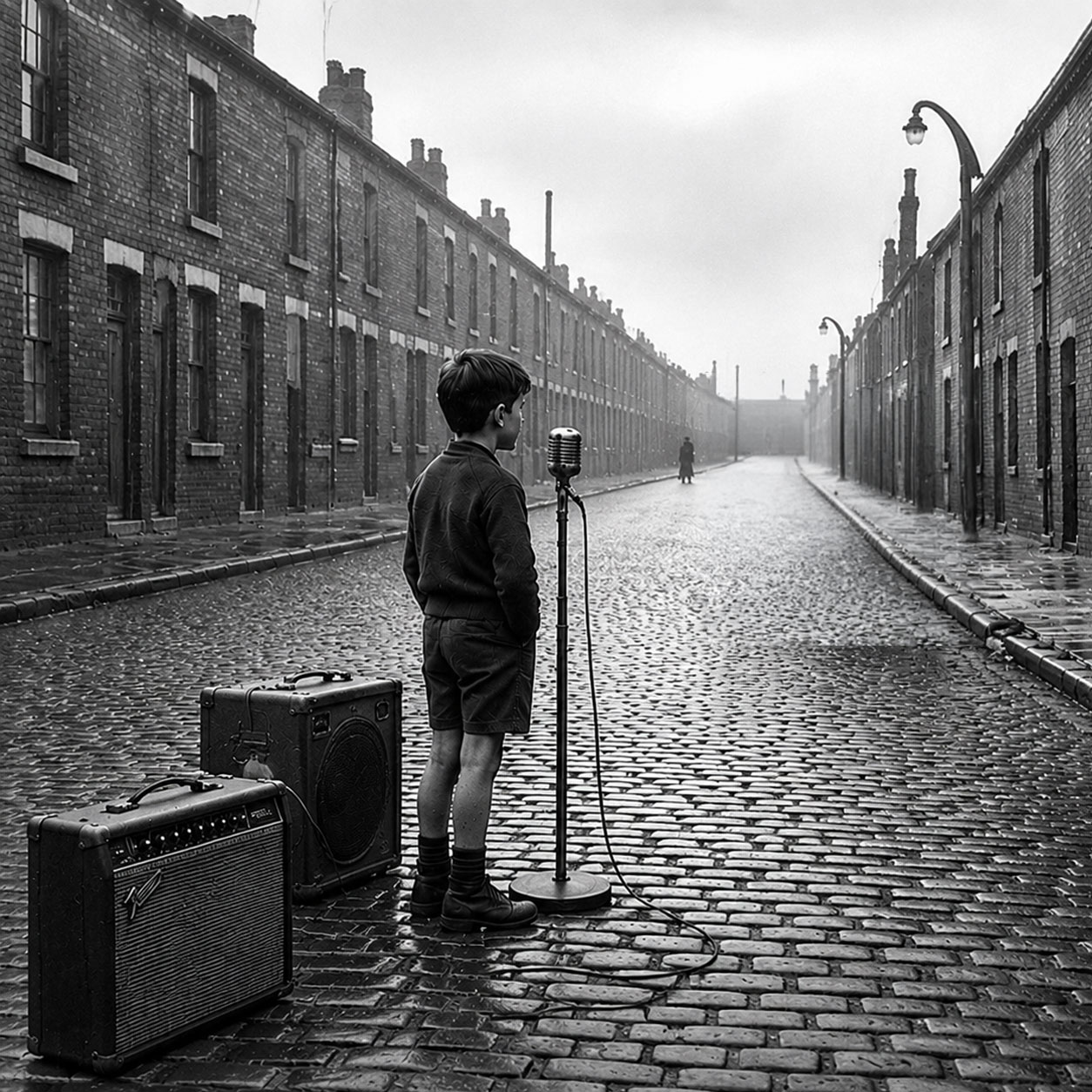
The Toolbox Has Changed