“
It’s Wigan, Mate, WELL SCHOLES REALLY!
” …
It’s Wigan, Mate
There are places you can describe with a postcode.
And then there are places you know by a feeling.
Wigan is one of them.
You can change the shops, knock down the old buildings, put up new ones, rename the streets and tell everyone that things are getting better.
But Wigan remembers.
The photograph above is a glimpse of a town caught between two worlds. Old terraces, back yards, workshops and streets sit alongside the new developments that were beginning to reshape the town. It isn’t polished. It isn’t staged. It’s just Wigan.
And perhaps that’s what makes it so powerful.
There is something about old photographs of Wigan that stops you in your tracks. You see the buildings, but you also see the people who lived behind those windows. The families, the workers, the kids playing in the streets, the pubs, the shops and the everyday life that rarely makes it into the history books.
Then you look at Wigan today.
Some things have disappeared.
Some things have changed beyond recognition.
And some things stubbornly remain.
The accent.
The humour.
The ability to take the mick when things are going wrong.
That Northern habit of looking at something slightly ridiculous and simply saying:
“It’s Wigan, mate.”
It’s not necessarily an expression of pride or disappointment.
Sometimes it’s both.
Because Wigan has always been a town of contradictions. Proud of its past, but constantly being told it needs to reinvent itself. Full of ordinary people getting on with ordinary lives while decisions about the town are made somewhere else.
The old photograph reminds us that towns aren’t just collections of buildings.
They are layers.
One generation builds something.
Another pulls it down.
Another complains that it was better before.
And another wonders what happened to the place they were promised.
But underneath all of that, there are still people.
Still stories.
Still memories.
Still somebody leaning over the garden wall having an opinion about absolutely everything.
That’s Wigan.
Not the brochure version.
Not the corporate version.
Not the version polished up for a press release.
The real version.
The wet pavements. The empty units. The old brick. The new developments. The memories of what stood there before. The characters you only meet in places like this.
And that’s where “It’s Wigan, Mate” comes from.
It’s not really a song about a building.
It’s not even really a song about a town.
It’s about recognition.
That moment when you look around and realise that, despite everything that has changed, you know exactly where you are.
You don’t need a sign.
You don’t need a map.
Someone says something that makes absolutely no sense to anyone outside Lancashire and you know you’re home.
It’s Wigan, mate.
And maybe that’s enough explanation.
Because some places don’t need explaining.
You just have to have lived there.
Rola Cola Ray
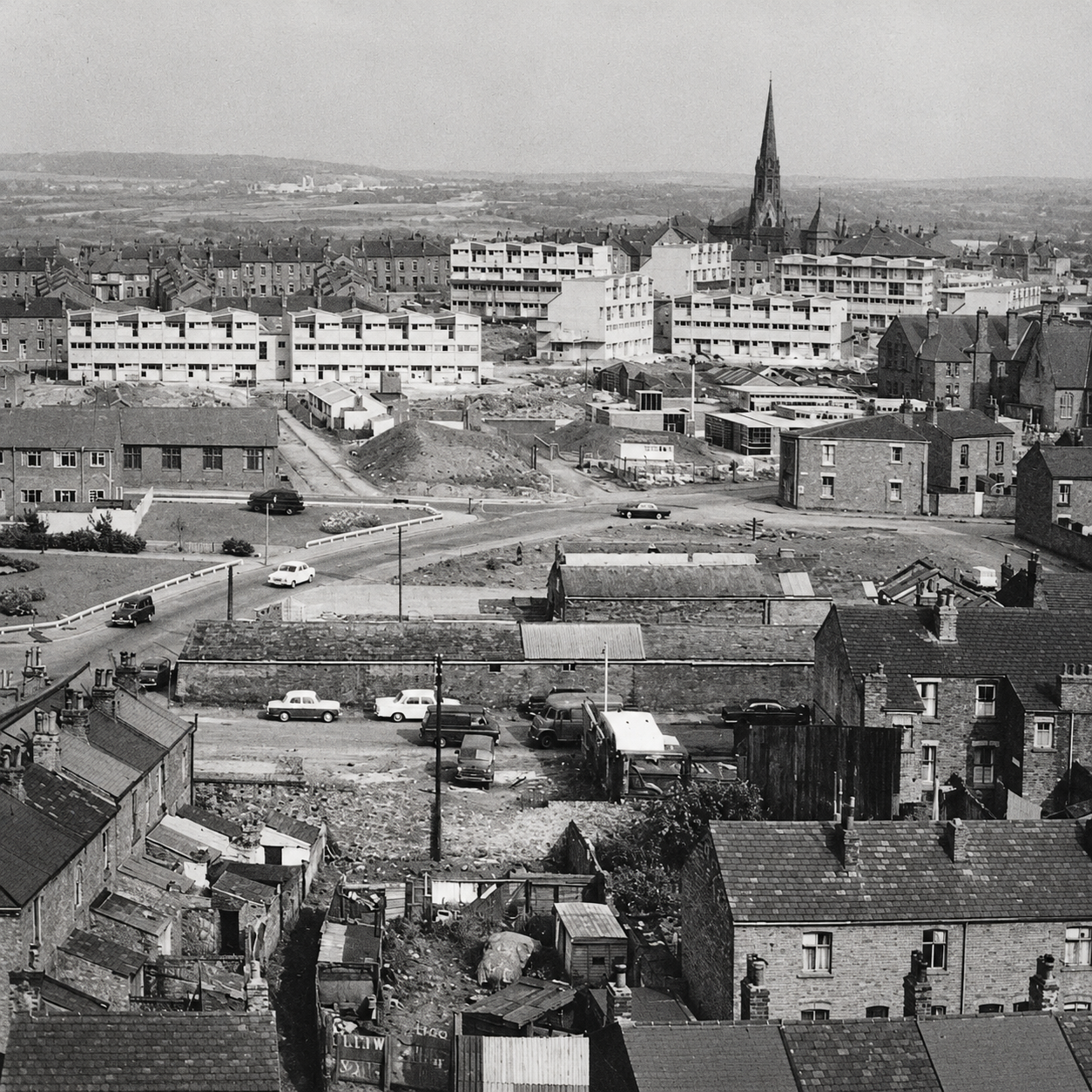
Old Scholes around 1970