“Are we slowly moving from public policing towards a society where security itself becomes an industry?”
What Happened to Policemen?
A Rola Colas rant about policing, security and who really holds the power
What happened to policemen?
That is the question behind my latest Rola Colas track.
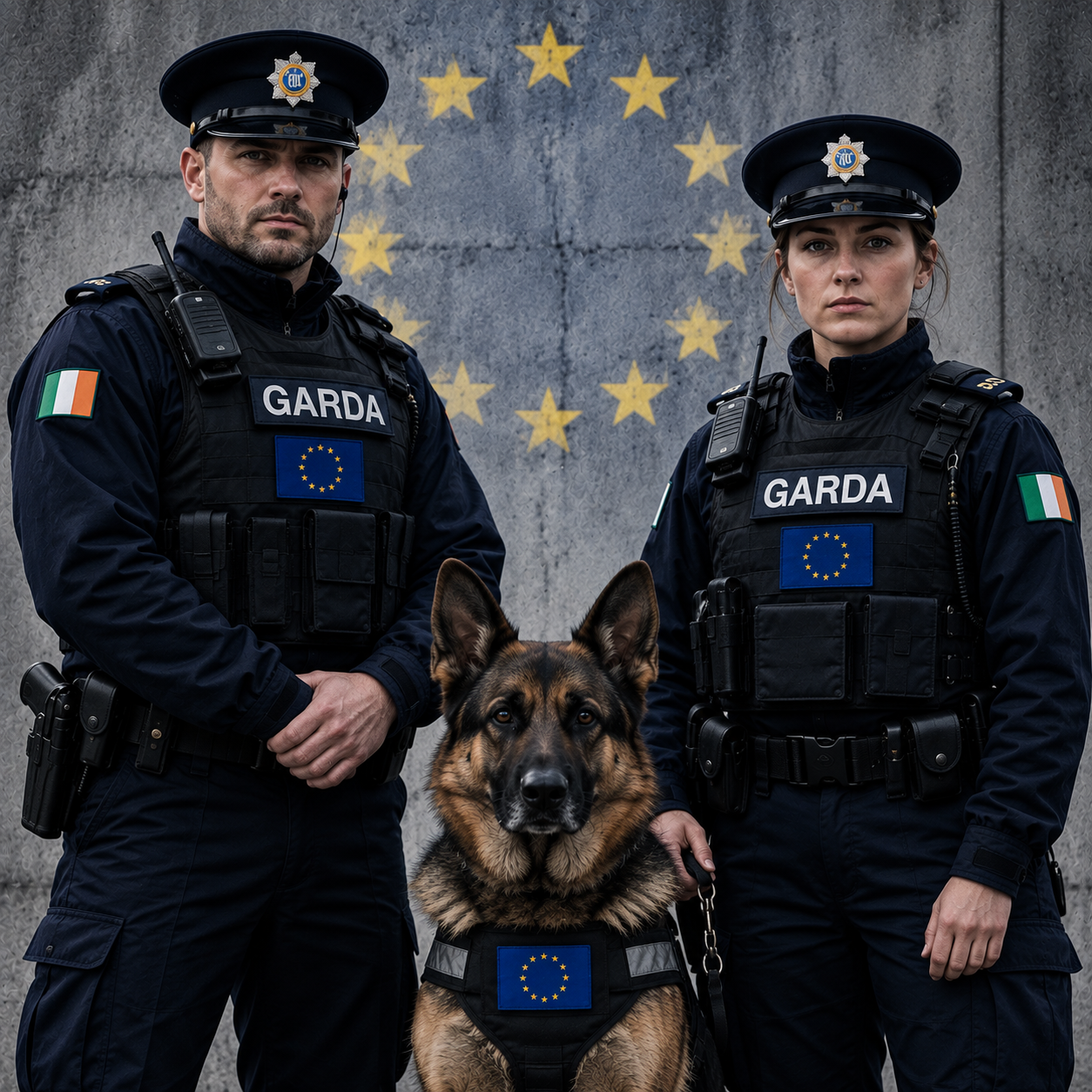
Not an attack on every Garda. Not a claim that every officer has forgotten why they joined.
It is a question about the direction of society.
Because somewhere along the line, the image of the policeman changed.
The copper who walked the beat.
The copper who knew the streets.
The copper who knew the people.
The copper who was supposed to stand between ordinary people and injustice.
And now?
We live in a world of cameras, barriers, private security, access control, surveillance technology and ever-expanding security contracts.
And the security industry really is growing.
Ireland’s Private Security Authority reported 43,958 licensed individuals and 1,383 licensed contractors at the end of 2025, with the number of individual licences reaching its highest level since licensing began.
Its 2026–2028 strategic plan anticipates the number of licences increasing from around 52,000 to more than 60,000 over the course of the plan.
That’s a remarkable expansion.
And it makes me ask:
Where does policing end and private security begin?
An Garda Síochána itself has also used private-sector services for particular functions. In 2026, for example, a tender was issued for a managed security-screening service involving magnetometers, X-ray machines, transport, setup and training for special-event locations.
There have also been 2026 procurement notices for private security services connected with EU Presidency venues, including Dublin Castle and associated hotels.
None of that proves some grand conspiracy.
But it does raise a question worth asking.
Are we slowly moving from public policing towards a society where security itself becomes an industry?
Because once security becomes big business, there is inevitably money involved.
More threats.
More protection.
More technology.
More contracts.
More surveillance.
And potentially, more restrictions.
The official language is always reassuring:
Safety.
Protection.
Security.
But what happens when the pursuit of security begins to change the relationship between the citizen and the state?
What happens when ordinary people feel that there are more barriers between them and the people making the decisions?
What happens when the policeman is increasingly seen not as the person standing beside the public, but as the person enforcing rules handed down from above?
That’s where my song comes in.
It isn’t trying to tell people what to think.
It’s asking questions.
Questions about power.
Questions about policing.
Questions about private security.
Questions about surveillance.
Questions about who writes the rules.
And ultimately:
Who are those rules really serving?
My chorus puts the question bluntly:
What happened to policemen,
Who kept justice,
Who made the law equal?
Then comes the line that sums up the whole rant:
The copper serves his master…
That’s deliberately provocative.
Because a protest song isn’t supposed to politely sit in the corner.
It’s supposed to make you stop.
Listen.
Think.
And maybe ask your own questions.
Who watches the watchers?
Who protects the people?
Who decides what is necessary?
And where does protection end and control begin?
That’s the rant.
That’s the song.
And that’s the question I’m throwing out there.
What happened to policemen?
And what happens to us when security becomes the answer to everything?
Who?